Key Takeaways
- SaaS minimises upfront capital outlay and infrastructure maintenance, making it ideal for standardised business needs.
- Dedicated or custom-licensed software provides full control over data residency, custom workflows and long-term unit economics at scale.
- For software product founders, multi-tenant SaaS unlocks recurring revenue and single-codebase updates across every customer.
Understanding the Two Software Models
Decision-makers encounter the "SaaS vs traditional software" question from two angles: as buyers choosing how to run internal operations, and as product owners deciding how to package software for their own customers.
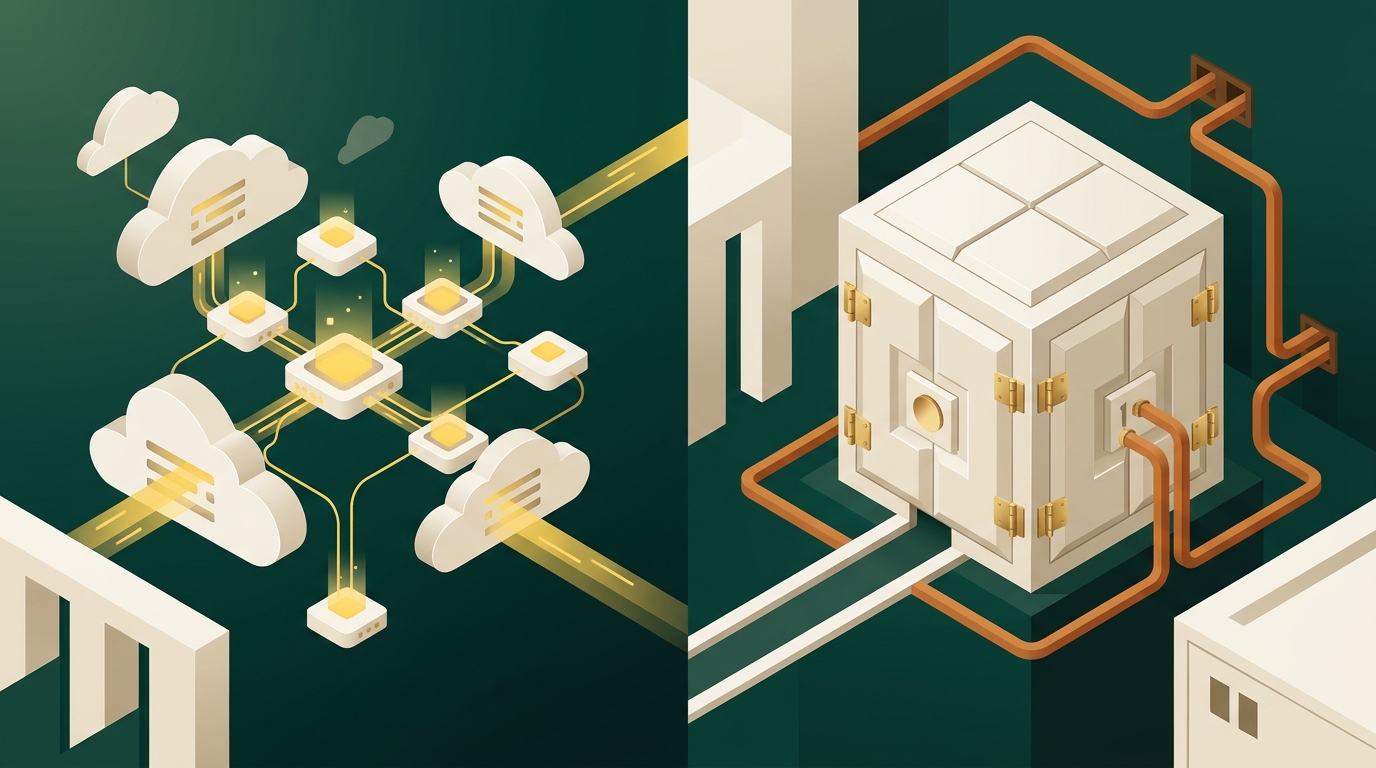
Software-as-a-Service (SaaS) delivers a centrally hosted, multi-tenant cloud application accessed via browser or mobile app on a recurring subscription. Traditional (or dedicated) software is either licensed for self-hosted/private-cloud deployment or custom-built specifically for a single organisation’s infrastructure.
Where Cloud SaaS Shines
SaaS removes the burden of provisioning servers, applying operating system patches and coordinating manual version upgrades across client machines. Users sign in from any device, receive security fixes immediately and start with predictable monthly operating expenditure.
If you are commercialising industry expertise into a new digital product, a multi-tenant SaaS architecture lets your engineering team maintain one codebase, ship continuous improvements to every subscriber simultaneously and scale plans cleanly.
- Rapid onboarding with minimal IT setup required from customers.
- Single production codebase simplifies bug fixes, monitoring and feature rollouts.
- Predictable subscription revenue and flexible usage-based or tiered pricing.
Where Traditional or Dedicated Software Wins
Multi-tenant SaaS vendors must serve thousands of companies identically, which limits deep workflow customisation, custom database integrations and control over release timing. Per-seat SaaS pricing can also become punishing once hundreds of casual staff, field contractors or external partners need logins.
Dedicated custom software or single-tenant cloud deployments give your organisation strict control over Australian data residency, custom security boundaries, offline/on-premise network access and bespoke operational logic.
Many modern organisations adopt a hybrid strategy: multi-tenant SaaS for email, accounting and HR, paired with a dedicated custom platform for core operations and customer portals.
Comparing Total Cost Over 3–5 Years
Evaluating software purely on month-one price can be misleading. Calculate total cost over a three-to-five-year horizon—factoring in seat growth, paid add-on tiers, integration workarounds and staff time spent compensating for missing features.
Conversely, when evaluating custom or self-hosted software, include ongoing cloud hosting, automated backups and regular maintenance patching so comparisons stay realistic.